
“ABŞ bayrağını Marsda ucaldacağıq” [AZ]

Amerikalılar öz bayraqlarını Marsda ucaldacaqlar
Xəbər verilir ki, bunu ABŞ Prezidenti Donald Tramp Vaşinqtonda Birləşmiş Ştatların Müstəqillik Gününə həsr olunmuş çıxışında deyib.
O qeyd edib ki, bu hadisə tezliklə olacaq: “İstəyirəm biləsiniz ki, biz çox yaxınlarda Aya qayıdacağıq və bir gün, tezliklə ABŞ bayrağını Marsda ucaldacağıq”.
Xatırladaq ki, D.Tramp mayın ortalarında Ay və Marsın öyrənilməsi üçün NASA-nın büdcəsinə əlavə 1,6 milyard dollar ayıracağını vəd etmişdi.
Mənbə: Virtualaz.org
Saytın məlumatlarından istifadə edərkən link ilə istinad mütləq vacibdir!
- Published in U.S.A, weNews, weUniverse
Yay fəslinin Azərbaycana gəlmə vaxtı açıqlanıb [AZ]

Bu il yay fəslinin Azərbaycana gəlmə vaxtı açıqlanıb.
AMEA N.Tusi adına Şamaxı Astrofizika Rəsədxanasının elmi işlər üzrə direktor müavini, fizika üzrə fəlsəfə doktoru Xıdır Mikayılov bildirib ki, yay fəslinin ölkəmizə qədəm qoyması iyunun 21-də yerli vaxtla saat 19:54-ə təsadüf edəcək. Həmin vaxt yay Günəş qarşıdurması anı adlanır.
Qeyd edək ki, payız sentyabrın 23-də Bakı vaxtı ilə saat 11:50-də (payız gecə-gündüz bərabərliyi), qış isə dekabrın 22-si saat 08:19-da (qış Günəş qarşıdurması anı) başlanacaq.
Mənbə: Azərbaycan Milli Elmlər Akademiyası
Saytın məlumatlarından istifadə edərkən link ilə istinad mütləq vacibdir!
- Published in News of Azerbaijan, weScience, weUniverse
İnsanların Marsa uçuşu təxirə salındı [AZ]
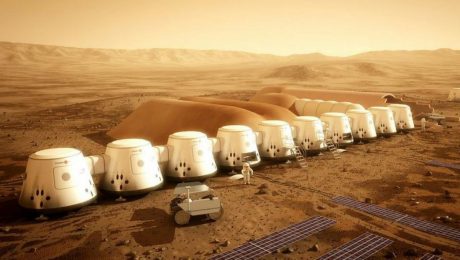
Marsda daimi koloniyanın yaradılmasını nəzərdə tutan “Mars One” layihəsinin “Mars One Ventures” kommersiya bölməsi iflas etdiyini elan edib.
Bu barədə “Engadget” nəşrində məlumat yayılıb.
İsveçrənin Bazel şəhərinin mülki məhkəməsinin çıxardığı qərara əsasən, adıçəkilən şirkət 15 yanvar 2019-cu ildə müflis olub.
Layihənin rəhbərlərindən olan Bas Lansdorp fəaliyyətlərini davam etdirmələrinə rəğmən, investisiyaların kəsilməsinin qarşıya qoyulan məqsədlərin icrasını mümkünsüz etdiyini dilə gətirib. Lansdorp “Engadget”ə verdiyi açıqlamada təfərrüata varmasa da, problemin həllini tapması üçün hazırda əlindən gəldiyini etdiyini vurğulayıb.
“Mars One” iki bölmədən ibarətdir: İsveçrədə qərarlaşan və teleyayım hüquqlarına malik olan “Mars One Ventures” kommersiya bölməsi və Niderlandda qərarlaşan və bütün layihələri idarə edən “Mars One Foundation” qeyri-kommersiya bölməsi.
Bundan əvvəl layihənin “Marsdakı” koloniyaçıların həyatı haqqında realiti-şounun reklam gəlirləri hesabına maliyyələşdiriləcəyi bildirilirdi. Layihə çərçivəsində dünyanın dörd bucağından yüz minlərlə könüllü arasında seçimlər həyata keçirilmiş və onun əsasında sənədli film lentə alınmışdı.
Qeyd edək ki, “Mars One” layihəsinin ən tükürpədici məqamlarından biri, koloniyaçıların bir daha Yer planetinə geri dönə bilməyəcəkləri idi.
Plana görə, layihə çərçivəsində Marsda “yaşama haqqı qazanmış” könüllülər 2027-ci ildə “Qırmızı planetə” eniş etməli idi.
Mənbə: Oxu Az
Saytın məlumatlarından istifadə edərkən link ilə istinad mütləq vacibdir!
- Published in weNews, weScience, weUniverse
“Qanlı Ay” tutulması [AZ]

Yanvarın 21-də 2019-cu ilin ilk Ay tutulması hadisəsi müşahidə olunur. Onun maksimal fazası Qrinviç vaxtı ilə 05:12 (Bakı vaxtı ilə 09:12) qeydə alınacaq.
Xəbər verilir ki, bu barədə “5-TV” xəbər portalı məlumat yayıb.
Ay tutulması qış fəslinə təsadüf edib və atmosfer qırmızı-narıncı spektr şüalarını daha yaxşı keçirdiyindən məhz bu çalarlı dalğalar Yerin təbii peykinin üzərində proyeksiya olunub. Ona görə, hadisəni Qırmızı və ya “Qanlı Ay” tutulması adlandırırlar.
“Qanlı Ay” tutulması Birləşmiş Krallıq, Rusiyanın şimal-şərqi, Fransa, İspaniya və Portuqaliyanın şimal-qərbində, Afrikanın qərbi ölkələrində və digər bölgələrdə müşahidə olunur.
Mənbə: Ruptly / Oxu.az
Saytın məlumatlarından istifadə edərkən link ilə istinad mütləq vacibdir!
- Published in weNews, weUniverse
Is Saturn going to lose its rings?

Saturn put a ring on it, but will it last? A recent study co-authored by NASA Goddard space physicist James O’Donoghue suggests the answer is no!
Thanks to a process called “ring rain,” water is being pulled out of the 100-million-year-old rings of Saturn and onto the planet. Based on observations made from Hawaii, ring rain could be taking as much as 6,000 pounds of Saturn’s rings every second!
Using the estimation of the mass of Saturn’s rings (about 60 quintillion pounds), that means ring rain could cause the ring system of Saturn to be depleted in the next 300 million years. Additional data from the Cassini mission that spent 13 years studying Saturn suggests this process could even happen in just 100 million years.
First observed in 1610 by Galileo, we’ve learned so much about the amazing rings of Saturn. From thinking the rings were two giant moons, to suggesting they were a solid disk around the planet, to sending four spacecraft missions to observe even closer, we know now that the rings are made of millions of small pieces of ice.
Being mostly water-ice in composition, one of the most widely accepted ideas for how the rings formed is that they used to be moons whose outer icy layers were pulled apart by Saturn’s gravity, while the cores of the moons fell into Saturn in its earlier years. The icy moon layers then flattened out into a bright, wide set of icy rings.
A few things to keep in mind:
- There is a large range of how much water the ring rain actually grabs at different times (it may be as little as 900 pounds a second), so the estimation is just that: an estimation.
- 300 million years seems like a long time, but it is relatively short when we consider the age of the universe.
- If rings aren’t supposed to be a permanent fixture of planets, maybe the other outer planets (Jupiter, Uranus, and Neptune) used to have wider, brighter rings too!
Interested in learning more about the planets in our solar system? Soar through space when you catch a show in LSC’s Jennifer Chalsty Planetarium, the biggest planetarium in the Western Hemisphere. Click here to get showtimes and see what’s currently playing.
Source: lsc.org
Saturn is officially losing its rings — and they’re disappearing much faster than scientists had anticipated
- Saturn is losing its rings.
- New data from NASA’s former Cassini spacecraft has revealed that the rings will be gone 200 million years sooner than previously estimated.
- We explain what’s going on with Saturn’s rings and why they’re disappearing at a faster rate than previously thought.
If you were to pick Saturn out of a lineup you’d probably recognize it by its iconic rings. They’re the biggest, brightest rings in our solar system. Extending over 280,000 km from the planet; wide enough to fit 6 Earths in a row. But Saturn won’t always look this way. Because its rings are disappearing.
That’s right, Saturn is losing its rings! And fast. Much faster, even, than scientists had first thought. Right now, it’s raining 10,000 kilograms of ring rain on Saturn per second. Fast enough to fill an Olympic-sized pool in half an hour.
This rain is actually the disintegrated remains of Saturn’s rings. Saturn’s rings are mostly made up of chunks of ice and rock. Which are under constant bombardment: Some by UV radiation from the Sun and others by tiny meteoroids.
When these collisions take place, the icy particles vaporize, forming charged water molecules that interact with Saturn’s magnetic field; ultimately, falling toward Saturn, where they burn up in the atmosphere.
Now, we’ve known about ring rain since the 1980s when NASA’s Voyager mission first noticed mysterious, dark bands that turned out to be ring rain caught in Saturn’s magnetic fields. Back then, researchers estimated the rings would totally drain in 300 million years. But observations by NASA’s former Cassini spacecraft give a darker prognosis. Before its death dive into Saturn in 2017, Cassini managed to get a better look at the amount of ring-dust raining on Saturn’s equator.
And discovered that it was raining heavier than previously thought. With these clearer observations, scientists calculated the rings had only 100 million years left to live. Now, it’s tough to imagine a ringless Saturn.
But for much of its existence, the planet was as naked as Earth. While Saturn first formed around 4.5 BILLION years ago, studies suggest the rings are only 100- 200 million years old, tops. That’s younger than some dinosaurs.
So when you think about it, we’re pretty lucky we happened to be around to see those magnificent rings. Really lucky, in fact. Because efforts to study those rings have led us to other discoveries.
For example, as Cassini explored Saturn’s moon Enceladus, it uncovered a trail of ice and gas leading back to Saturn’s E ring. Enceladus is the whitest, most reflective moon in our solar system.
And by studying the ring more closely, scientists now know why. Turns out, the moon is constantly gushing out gas and dust.
Some of it ends up in space and in the E ring while the rest snows back onto the moon’s surface, creating a blinding white frost.
So, who knows what other discoveries might be hiding within the rings? At the very least, it’s clear we’d better keep looking while we still can.
Source: businessinsider.com
For permission content from this site must be hyperlinked when used!
- Published in weNews, weUniverse
Qış fəslinin Azərbaycana gəlmə vaxtı açıqlanıb [AZ]

Qış fəslinin Azərbaycana gəlmə vaxtı açıqlanıb
Bu il qış fəslinin Azərbaycana gəlmə vaxtı məlum olub. Xəbər verilir ki, bununla da payız fəsli başa çatıb, ölkə ərazisində qış fəsli başlayıb. Bu barədə AMEA-nın N.Tusi adına Şamaxı Astrofizika Rəsədxanasından məlumat verilib. Bu barədə AMEA N.Tusi adına Şamaxı Astrofizika Rəsədxanasının elmi işlər üzrə direktor müavini, fizika üzrə fəlsəfə doktoru Xıdır Mikayılov məlumat verib.
Alim qeyd edib ki, qış fəslinin Azərbaycana gəlişi dekabrın 22-i Bakı vaxtı ilə saat 02:22-də baş verəcək. Həmin tarixdə payız fəsli başa çatacaq, ölkə ərazisinə qış fəsli daxil olacaq.
Qeyd edək ki, dekabrın 21-dən 22-nə keçən gecə ilin ən uzun gecəsidir. Bu gündən etibarən gecələr qısalmağa, gündüzlər uzanmağa başlayacaq.
Azərbaycana bahar fəsli martın 20-də qədəm qoyacaq. Yazın gəlişi ilə gecə və gündüz bərabərləşəcək.
Mənbə: www.science.gov.az
Saytın məlumatlarından istifadə edərkən link ilə istinad mütləq vacibdir!
- Published in Azerbaijan, weNews, weScience, weUniverse
Marsa səfər insanları qocaldacaq [AZ]

Marsa uçuş kosmik missiyanın hər bir ekipaj üzvünü radiasiya ilə təmasa görə 2,5 il qocaldacaq.
Oxu.Az xəbər verir ki, bu haqda “RİA Novosti” Mosvkada keçirilən Aviakosmik və Ekoloji Tibb adlı konfransın hesabatına istinadən məlumat yayıb.
“Marsa uzun sürən (üç ilə qədər) uçuş zamanı və uçuşdan sonra maksimum günəş aktivliyi şəraitində müxtəlif qalınlıqlı radiasiyadan qoruyan alüminium “sığınacaqda” olan kosmonavtların üzləşəcəyi ümumi radiasiya riski hesablanıb.
Sadə şar formalı kosmik aparat və onun içində olan insan bədənini imitasiya edən fantom model əsasında aparılan hesablamalara görə, Marsa iki il müddətli uçuş və geri dönüş zamanı hər bir ekspedisiya üzvü üçün radiasiya riski yaşdan asılı olmayaraq 7,5 faiz təşkil edəcək. Bu isə kosmonavtların ömrünün orta hesabla 2,5 il qısalmasına yol açacaq”, – deyə sənəddə bildirilir.
Mənbə: oxu.az
Saytın məlumatlarından istifadə edərkən link ilə istinad mütləq vacibdir!
- Published in weUniverse
Bu il payız Azərbaycana sentyabrın 23-də daxil olacaq [AZ]

Payız fəslinin Azərbaycana daxil olacağı vaxt açıqlanıb
AMEA-nın N.Tusi adına Şamaxı Astrofizika Rəsədxanası payız fəslinin Azərbaycana gələcəyi vaxtı açıqlayıb.
Rəsədxananın elmi işlər üzrə direktor müavini, fizika üzrə fəlsəfə doktoru Xıdır Mikayılovun verdiyi məlumata görə, payız fəsli Azərbaycana sentyabrın 23-də, Bakı vaxtilə saat 05:54-də daxil olacaq.
Qeyd edək ki, ölkəmizə növbəti payız fəslinin gəlişi 23 sentyabr 2019-cu ildə saat 11:50-də baş tutacaq və Günəş ekliptika üzrə hərəkət edərək Şimal yarım kürəsindən Cənub yarım kürəsinə keçəcək.
Mənbə: AMEA
Saytın məlumatlarından istifadə edərkən link ilə istinad mütləq vacibdir!
- Published in weNews, weScience, weUniverse
27–28 July 2018 — Total Lunar Eclipse

The second total lunar eclipse of 2018 will be visible in large parts of Australia, Asia, Africa, Europe, and South America. Totality will last for 103 minutes, making it the longest eclipse of the 21st century.
Regions seeing, at least, some parts of the eclipse: Much of Europe, Much of Asia, Australia, Africa, South in North America, South America, Pacific, Atlantic, Indian Ocean, Antarctica.
List of some cities where at least part of the total eclipse was visible
- Tokyo, Japan
- Brussels, Belgium
- Lisbon, Portugal
- London, England, United Kingdom
- Budapest, Hungary
- Cairo, Egypt
- Ankara, Turkey
- Jakarta, Jakarta Special Capital Region, Indonesia
- Athens, Greece
- Rome, Italy
- Yangon, Myanmar
- Madrid, Spain
- Sydney, New South Wales, Australia
- New Delhi, Delhi, India
- Melbourne, Victoria, Australia
- Paris, Île-de-France, France
- Moscow, Moscow, Russia
- Beijing, Beijing Municipality, China
- Rio de Janeiro, Rio de Janeiro, Brazil
- Buenos Aires, Argentina
Was this eclipse visible in Baku?
Micro Blood Moon Eclipse
Total lunar eclipses are also sometimes called Blood Moons because of the reddish-orange glow the Moon takes on during the eclipse.
On the day of the eclipse, the Full Moon is also at its farthest from the Earth, so it looks a little smaller in the sky, making this a Blood Micro Moon eclipse.
When the Eclipse Happened Worldwide — Timeline
Lunar eclipses can be visible from everywhere on the night side of the Earth, if the sky is clear. From some places, the entire eclipse will be visible, while in other areas the Moon will rise or set during the eclipse.
| Event | UTC Time | Time in Baku* | Visible in Baku |
|---|---|---|---|
| Penumbral Eclipse began | 27 Jul, 17:14:47 | 27 Jul, 21:14:47 | Yes |
| Partial Eclipse began | 27 Jul, 18:24:27 | 27 Jul, 22:24:27 | Yes |
| Full Eclipse began | 27 Jul, 19:30:15 | 27 Jul, 23:30:15 | Yes |
| Maximum Eclipse | 27 Jul, 20:21:44 | 28 Jul, 00:21:44 | Yes |
| Full Eclipse ended | 27 Jul, 21:13:11 | 28 Jul, 01:13:11 | Yes |
| Partial Eclipse ended | 27 Jul, 22:19:00 | 28 Jul, 02:19:00 | Yes |
| Penumbral Eclipse ended | 27 Jul, 23:28:38 | 28 Jul, 03:28:38 | Yes |
* The Moon was above the horizon during this eclipse, so with good weather conditions in Baku, the entire eclipse was visible.
The times displayed are accurate within 2-3 seconds.
The magnitude of the eclipse is 1.609.
The penumbral magnitude of the eclipse is 2.679.
The total duration of the eclipse is 6 hours, 14 minutes.
The total duration of the partial phases is 2 hours, 12 minutes.
The duration of the full eclipse is 1 hour, 43 minutes.

An Eclipse Never Comes Alone!
A solar eclipse always occurs about two weeks before or after a lunar eclipse.
Usually, there are two eclipses in a row, but other times, there are three during the same eclipse season.
This is the second eclipse this season.
First eclipse this season: 13 July 2018 — Partial Solar Eclipse
Third eclipse this season: 11 August 2018 — Partial Solar Eclipse
Source: Time and Date
For permission content from this site must be hyperlinked when used!
- Published in weNews, weUniverse
June Solstice: Longest and Shortest Day of the Year

The June solstice is the summer solstice in the Northern Hemisphere and the winter solsticein the Southern Hemisphere.

The June Solstice. (Not to scale)
The date varies between June 20 and June 22, depending on the year, and the local time zone.
June Solstice in Baku, Azerbaijan was on
Thursday, 21 June 2018, 14:07 AZT (Change city)
June Solstice in Universal Coordinated Time was on
Thursday, 21 June 2018, 10:07 UTC
- Local times for June Solstice 2018 worldwide
- Day and Night map for June Solstice 2018
- Equinoxes and solstices from 2000–2049
Zenith Furthest Away from the Equator
A solstice happens when the sun’s zenith is at its furthest point from the equator. On the June solstice, it reaches its northernmost point and the Earth’s North Pole tilts directly towards the sun, at about 23.4 degrees.
It’s also known as the northern solstice because it occurs when the sun is directly over the Tropic of Cancer in the Northern Hemisphere.
11 Facts About the June Solstice
Meaning of Solstice
“Solstice” (Latin: “solstitium”) means sun-stopping. The point on the horizon where the sun appears to rise and set, stops and reverses direction after this day. On the solstice, the sun does not rise precisely in the east, but rises to the north of east and sets to the north of west, meaning it’s visible in the sky for a longer period of time.
Although the June solstice marks the first day of astronomical summer, it’s more common to use meteorological definitions of seasons, making the solstice midsummer or midwinter.
Astronomical terms & definitions

Solstices in Culture
Over the centuries, the June solstice has inspired countless festivals, midsummer celebrations and religious holidays.
One of the world’s oldest evidence of the summer solstice’s importance in culture is Stonehenge in England, a megalithic structure which clearly marks the moment of the June solstice.
In the Southern Hemisphere, where the June solstice is known as the shortest day of the year, it marks the first day of astronomical winter, but the middle of winter in meteorological terms.
Midnight Sun or Polar Night?
On the June solstice, the midnight sun is visible (weather permitting) throughout the night, in all areas from just south of the Arctic Circle to the North Pole.
On the other side of the planet, south of the Antarctic Circle there’s Polar Night, meaning no Sunlight at all, on the June solstice.
Solstice Dates Vary
Even though most people consider June 21 as the date of the June solstice, it can happen anytime between June 20 and June 22, depending on which time zone you’re in. June 22 solstices are rare – the last June 22 solstice in UTC time took place in 1975 and there won’t be another one until 2203.
The varying dates of the solstice are mainly due to the calendar system – most western countries use the Gregorian calendar which has 365 days in a normal year and 366 days in a Leap Year.
A tropical year is the time it takes the Earth to orbit once around the Sun. It is around 365.242199 days long, but varies slightly from year to year because of the influence of other planets. The exact orbital and daily rotational motion of the Earth, such as the “wobble” in the Earth’s axis (precession of the equinoxes), also contributes to the changing solstice dates.
Moving to Other Seasons

After the June solstice, the sun follows a lower and lower path through the sky each day in the Northern Hemisphere until it reaches the point where the length of daylight is about 12 hours and eight to nine minutes in areas that are about 30 degrees north or south of the equator.
Areas 60 degrees north or south of the equator have daylight for about 12 hours and 16 minutes. This is the September Equinox, the Autumnal Equinox in the Northern Hemisphere.
Earth does not move at a constant speed in its elliptical orbit. Therefore the seasons are not of equal length: the times taken for the sun to move from the March Equinoxto the June solstice, to the September equinox, to the December solstice, and back to the March equinox are roughly 92.8, 93.6, 89.8 and 89.0 days respectively.
The consolation in the Northern Hemisphere is that spring and summer last longer than autumn and winter.
Source: Time and Date
For permission content from this site must be hyperlinked when used!
- Published in weUniverse