
Marsa səfər insanları qocaldacaq [AZ]

Marsa uçuş kosmik missiyanın hər bir ekipaj üzvünü radiasiya ilə təmasa görə 2,5 il qocaldacaq.
Oxu.Az xəbər verir ki, bu haqda “RİA Novosti” Mosvkada keçirilən Aviakosmik və Ekoloji Tibb adlı konfransın hesabatına istinadən məlumat yayıb.
“Marsa uzun sürən (üç ilə qədər) uçuş zamanı və uçuşdan sonra maksimum günəş aktivliyi şəraitində müxtəlif qalınlıqlı radiasiyadan qoruyan alüminium “sığınacaqda” olan kosmonavtların üzləşəcəyi ümumi radiasiya riski hesablanıb.
Sadə şar formalı kosmik aparat və onun içində olan insan bədənini imitasiya edən fantom model əsasında aparılan hesablamalara görə, Marsa iki il müddətli uçuş və geri dönüş zamanı hər bir ekspedisiya üzvü üçün radiasiya riski yaşdan asılı olmayaraq 7,5 faiz təşkil edəcək. Bu isə kosmonavtların ömrünün orta hesabla 2,5 il qısalmasına yol açacaq”, – deyə sənəddə bildirilir.
Mənbə: oxu.az
Saytın məlumatlarından istifadə edərkən link ilə istinad mütləq vacibdir!
- Published in weUniverse
Yanvarin 31-i tam ay tutulması olacaq [AZ]
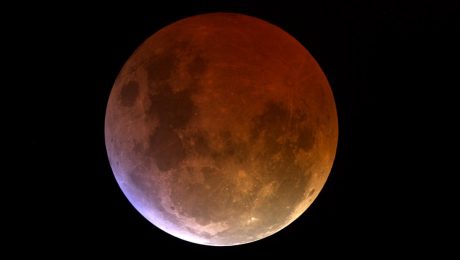
Yanvarın 31-də bu ilin ilk ay tutulması baş verəcək
weNews The Weather Channel-ə istinadən xəbər verir ki, bu ilin ilk tam ay tutulması baş verəcək. Ay tutulması yer kürəsinin kölgəsinə yerli vaxtla 14:51:13 daxil olacaq. Tam tutulma 17:29:51 radələrində gerçəkləşəcək. Ay tutulması tam olaraq 20:08:29 sona çatacaq.
Xəbər verilir ki, bu cür ay tutulması ABŞ tarixində 100 ildən bir baş verir.
Saytın məlumatlarından istifadə edərkən link ilə istinad mütləq vacibdir!
- Published in weNews, weUniverse
Yer kürəsi böyüklüyündə yeni planet kəşf edildi [AZ]

Günəş sisteminə qismən yaxın məsafədə mülayim iqlimə malik Yer kürəsi böyüklüyündə bir planet aşkarlanıb.
Xəbər verilir ki, Çilidəki La Silla Rəsədxanasında yüksək dəqiqlikli cihazlar vasitəsilə kəşf edilən planetin 11 işıq ili uzaqda olduğu bildirilib. Yer kürəsinə ikinci ən yaxın planet olan yeni kəşfə “Ross 128 b” adı verilib.
Yeni planetin öz ulduzu ətrafında Yer kürəsinin Günəşə qədər olan məsafəsindən 20 dəfə yaxın fırlandığı, balaca ulduzun Günəşdən çox kiçik və daha az parlaq olması səbəbindən “Ross 128 b”nin Yer kürəsinə nisbətən aşağı radiasiyaya məruz qaldığı bildirilib.
Astronomlar “Ross 128 b”nin səthi temperaturunun Yer kürəsininkinə yaxın ola biləcəyini təxmin edirlər.
Mənbə: Deyerler.org
Saytın məlumatlarından istifadə edərkən link ilə istinad mütləq vacibdir!
- Published in weNews, weUniverse
NASA Announces Cassini End-of-Mission Media Activities [EN]

Updated at 5:00 p.m. EDT on Sept. 12, 2017
On Sept. 15, NASA’s Cassini spacecraft will complete its remarkable story of exploration with an intentional plunge into Saturn’s atmosphere, ending its mission after nearly 20 years in space. News briefings, photo opportunities and other media events will be held at NASA’s Jet Propulsion Laboratory (JPL) in Pasadena, California, and will air live on NASA Television and the agency’s website.
Launched in 1997, Cassini arrived in orbit around Saturn in 2004 on a mission to study the giant planet, its rings, moons and magnetosphere. In April of this year, Cassini began the final phase of its mission, called its Grand Finale — a daring series of 22 weekly dives between the planet and its rings. On Sept. 15, Cassini will plunge into Saturn, sending new and unique science about the planet’s upper atmosphere to the very end. After losing contact with Earth, the spacecraft will burn up like a meteor. This is the first time a spacecraft has explored this unique region of Saturn — a dramatic conclusion to a mission that has revealed so much about the ringed planet.
Cassini flight controllers will monitor the spacecraft’s final transmissions from JPL Mission Control. Interviews with mission engineers and scientists will be available for media.
Cassini Media Events and Schedule
(The NASA TV news conferences will be available on the agency’s website, and times and details are subject to change).
Tuesday, Aug. 29
NASA held a media teleconference on Aug. 29 to preview activities during Cassini’s final two weeks. The event, which is archived, included these panelists:
- Curt Niebur, Cassini program scientist, NASA Headquarters, Washington
- Earl Maize, Cassini project manager, JPL
- Linda Spilker, Cassini project scientist, JPL
Wednesday, Sept. 13
- 1 p.m. EDT — News conference from JPL with a detailed preview of final mission activities (also available on NASA TV and online). Panelists will include:
- Jim Green, director of Planetary Science, NASA Headquarters, Washington
- Earl Maize, Cassini project manager, JPL
- Linda Spilker, Cassini project scientist, JPL
- Hunter Waite, team lead for Cassini’s Ion and Neutral Mass Spectrometer, Southwest Research Institute, San Antonio
- 11:30 a.m. and 2:30 p.m. PDT — Media tours of Mission Control (each group tour will last at least half an hour)
Thursday, Sept. 14
- 10 a.m. to 3 p.m PDT — NASA Social — onsite gathering for 30 pre-selected social media followers (JPL-accredited media may also attend). Events will include a tour, and a speaker program from 1 to 2 p.m. PDT that will be carried on NASA TV and online.
- 11:30 a.m. and 2:30 p.m. PDT — Media tours of Mission Control (each group tour will last at least half an hour)
- About 8 p.m. PDT — Final downlink of images expected to begin (posted online at https://saturn.jpl.nasa.gov/galleries/raw-images/)
Friday, Sept. 15: End of Mission
- 7 to 8:30 a.m. EDT — Live commentary on NASA TV and online. In addition, an uninterrupted, clean feed of cameras from JPL Mission Control, with mission audio only, will be available during the commentary on the NASA TV Media Channel and on Ustream.
- About 8 a.m. EDT — Expected time of last signal and science data from Cassini
- 9:30 a.m. EDT — Post-mission news conference at JPL (on NASA TV and online). Participants include:
- Thomas Zurbuchen, associate administrator for the Science Mission Directorate, NASA Headquarters, Washington
- Mike Watkins, center director, JPL
- Earl Maize, Cassini project manager, JPL
- Linda Spilker, Cassini project scientist, JPL
- Julie Webster, spacecraft operations chief, JPL
Source: NASA
For permission content from this site must be hyperlinked when used!
- Published in weUniverse
Cassini probe burned in the atmosphere of Saturn [EN]

Launched almost 20 years ago, the Cassini probe burned in the atmosphere of Saturn. Scientists hope that in the last moments of his “life” Cassini sent to Earth data that will reveal the secrets of the atmosphere of Saturn.

Red lines on the surface of the icy moon of Tethys.

Rings of Saturn “C” and “B” in the infrared spectrum.

The two largest satellites of Saturn are the fiery Titan and the icy Rhea.

Dazzling Saturn.

The satellite Enceladus sits behind Saturn.

“Rose”. A polar storm with a diameter of 2 thousand kilometers.

Titan on the background of Saturn.

Dion on the background of Saturn.

The Enceladus satellite, whose surface tells of great geological activity.

Source: NASA
For permission content from this site must be hyperlinked when used!
- Published in weUniverse
Good Old Summer Time [EN]

Saturn’s northern hemisphere reached its summer solstice in mid-2017, bringing continuous sunshine to the planet’s far north.
The solstice took place on May 24, 2017. The Cassini mission is using the unparalleled opportunity to observe changes that occur on the planet as the Saturnian seasons turn.
This view looks toward the sunlit side of the rings from about 17 degrees above the ring plane. The image was taken with the Cassini spacecraft wide-angle camera on April 17, 2017 using a spectral filter which preferentially admits wavelengths of near-infrared light centered at 939 nanometers.
The view was acquired at a distance of approximately 733,000 miles (1.2 million kilometers) from Saturn. Image scale is 44 miles (70 kilometers) per pixel.
The Cassini mission is a cooperative project of NASA, ESA (the European Space Agency) and the Italian Space Agency. The Jet Propulsion Laboratory, a division of the California Institute of Technology in Pasadena, manages the mission for NASA’s Science Mission Directorate, Washington. The Cassini orbiter and its two onboard cameras were designed, developed and assembled at JPL. The imaging operations center is based at the Space Science Institute in Boulder, Colorado.
Source: nasa.gov
Credit: NASA/JPL-Caltech/Space Science Institute
For permission content from this site must be hyperlinked when used!
- Published in weUniverse