
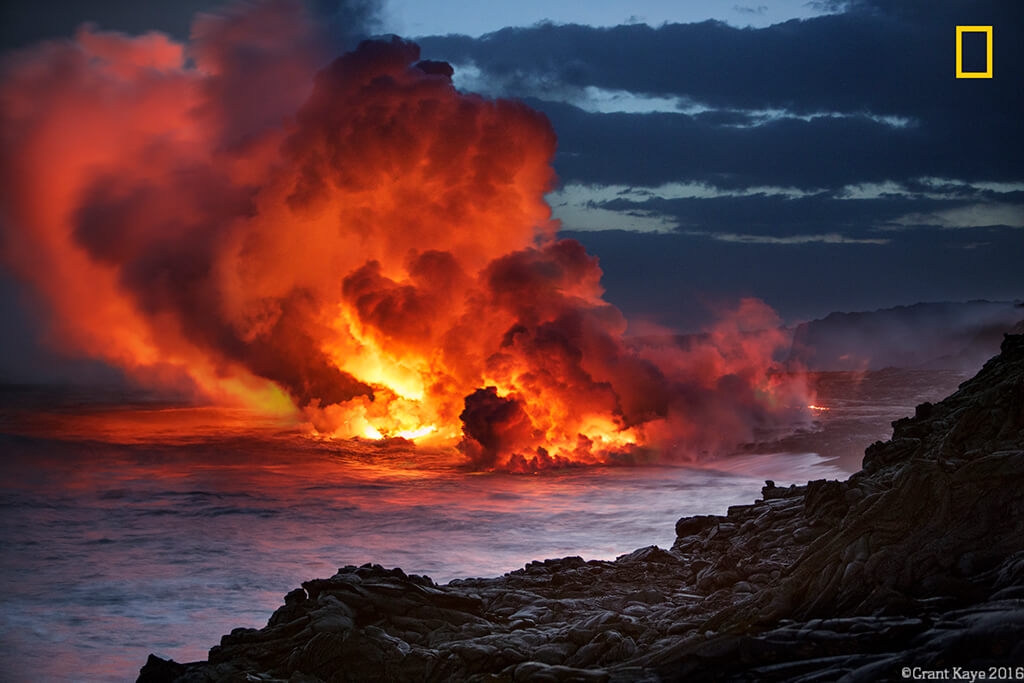
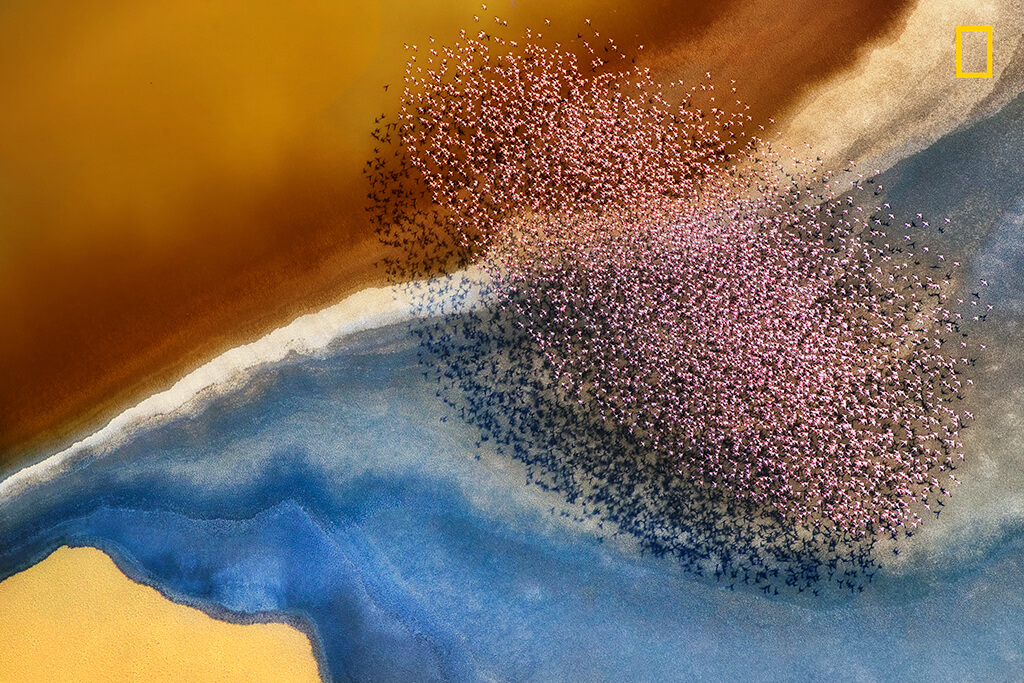
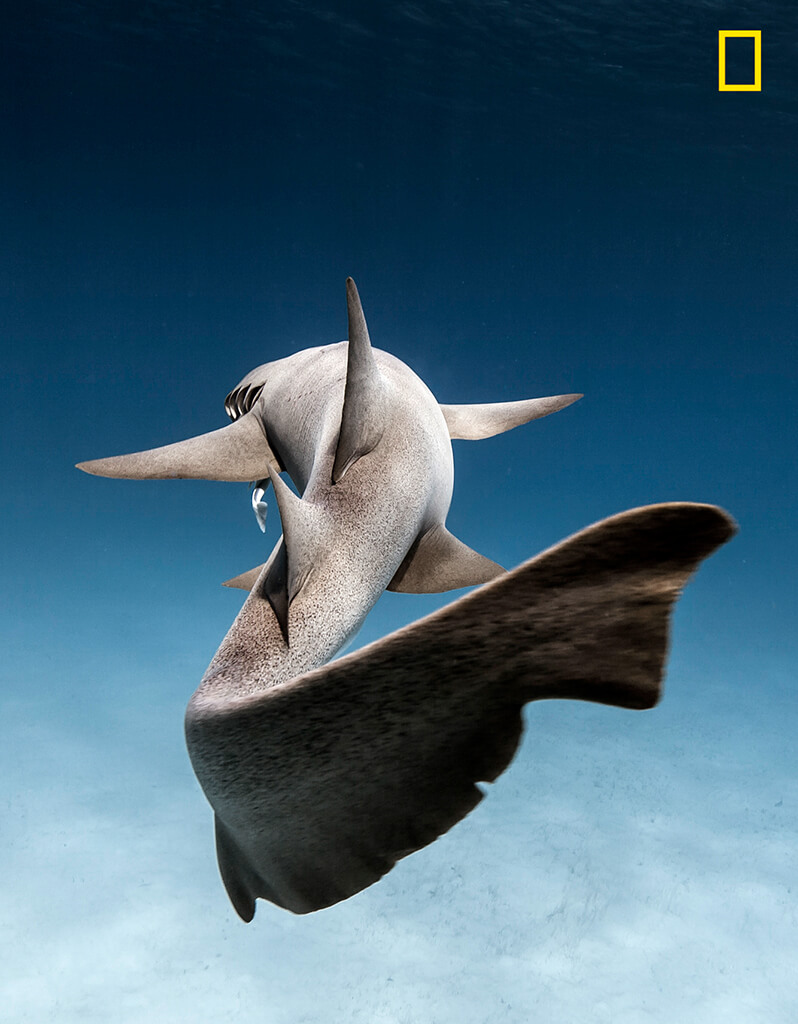
National Geographic chooses the best nature photographer in 2017 [US]
Monday, 23 October 2017



For permission content from this site must be hyperlinked when used!
- Published in wePhotography
No Comments
Naska xətləri [AZ]
Monday, 09 October 2017
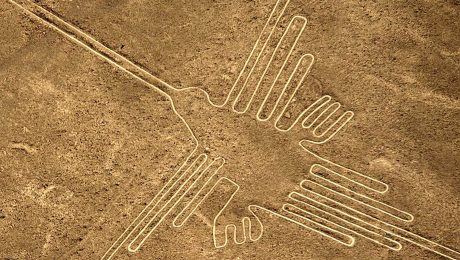
Naska xətti — Perunun cənub hissəsində, Naska dağ yamacında nəhəng həndəsi və fiqurlu geoqliflər. Şimaldan cənuba 50 kilometr, qərbdən şərqə 5-7 kilometr uzanan dağ yamacında 30-a qədər heoqlif rəsmlər (quş, meymun, hörmçək, güllər və s.); həmçinin 13 min xətt və 700-ə qədər həndəsi fiqur şəkilləri (əsasən üçbucaq və trapezlər, yüzlərlə spirallar) məlumdur.
Həcmlərinə görə ancaq çox yüksək məsafədən görünən bu simvollar özündə əsasən, heyvan və bitkilərin böyük təsvirini birləşdirir. Qədim astronavtlarla bağlı nəzəriyyə olan paleokontakt üzrə bir çox mütəxəssislərin fikrinə görə, bu fiqurlar kosmik gəmilər üçün eniş meydanı funksiyasını daşımışdır. “Google Earth” proqramı ilə özünüz də baxa bilərsiniz. Bəzi şəkillərini sizə təqdim edirik.
Şəkilləri:
Kolibri


Mənbə: Wikipedia, Wikimedia.
Saytın məlumatlarından istifadə edərkən link ilə istinad mütləq vacibdir!
- Published in World
Cassini End of Mission [EN]
Friday, 06 October 2017

Cassini program manager at JPL, Earl Maize, left, and spacecraft operations team manager for the Cassini mission at Saturn, Julie Webster embrace after the Cassini spacecraft plunged into Saturn, Friday, Sept. 15, 2017 at NASA’s Jet Propulsion Laboratory in Pasadena, California.
Click on image to see original version

Cassini program manager at JPL, Earl Maize, left, and spacecraft operations team manager for the Cassini mission at Saturn, Julie Webster embrace after the Cassini spacecraft plunged into Saturn, Friday, Sept. 15, 2017 at NASA’s Jet Propulsion Laboratory in Pasadena, California. Since its arrival in 2004, the Cassini-Huygens mission has been a discovery machine, revolutionizing our knowledge of the Saturn system and captivating us with data and images never before obtained with such detail and clarity. On Sept. 15, 2017, operators will deliberately plunge the spacecraft into Saturn, as Cassini gathered science until the end. The “plunge” ensures Saturn’s moons will remain pristine for future exploration. During Cassini’s final days, mission team members from all around the world gathered at NASA’s Jet Propulsion Laboratory, Pasadena, California, to celebrate the achievements of this historic mission. Photo Credit: (NASA/Joel Kowsky)
Source: NASA
For permission content from this site must be hyperlinked when used!
- Published in weScience, weUniverse
Long Way From Home [EN]
Friday, 06 October 2017

This picture of a crescent-shaped Earth and Moon – the first of its kind ever taken by a spacecraft – was recorded Sept. 18, 1977, by NASA’s Voyager 1 when it was 7.25 million miles (11.66 million kilometers) from Earth. The moon is at the top of the picture and beyond the Earth as viewed by Voyager

Source: NASA
For permission content from this site must be hyperlinked when used!
- Published in weScience, weUniverse
Best WordPress Dublicate Plugins [EN]
Friday, 06 October 2017

Here we are present you best plugins for move your WordPress site to another server.
Number 1 – Duplicator
Duplicator gives WordPress users the ability to migrate, copy, move or clone a site from one location to another and also serves as a simple backup utility. Duplicator handles both serialized and base64 serialized string replacement. WordPress migration and WordPress backups are easily handled by this plugin.
Plugin page: https://wordpress.org/plugins/duplicator/
Plugin homepage: http://lifeinthegrid.com/labs/duplicator/
Number 2 – WP Clone by WP Academy
WP Clone is the easiest, fastest and most secure way to move or copy a WordPress site to another domain or hosting server. You can also use it to move your site to/from local server hosting, to create copies of your site for development or testing purposes, to backup your site, and to install pre-configured versions of WordPress.
WP Clone is a superior solution to even commercial WordPress cloning plugins for the following reasons:
- Does not require FTP access to either the source or destination site – just install a new WordPress on the destination site, upload and activate WP Clone plugin, and follow the prompts
- It does not backup or restore the WordPress system files (just the user content and database) – reducing upload time and improving security of your site
- It fetches the site backup via your host’s direct http connection, which saves you from needing to upload large files through your internet connection
Plugin page: https://wordpress.org/plugins/wp-clone-by-wp-academy/
Plugin homepage: http://wpacademy.com/software/
For permission content from this site must be hyperlinked when used!
- Published in weSoftware
Create or use your Apple ID without a payment method [US]
Thursday, 05 October 2017

Learn how you can create or use your Apple ID in the iTunes Store without a credit card or other payment method.
When you use your Apple ID to sign in to the iTunes Store, App Store, or iBooks Store for the first time, you’re asked to enter a payment method so that you can purchase items from the store. Follow these steps if you don’t want to associate a payment method with your account.
Apple recommends using only one Apple ID to access iTunes, iCloud, and other Apple services. If you don’t remember if you have an Apple ID, we’ll help you find it.
If you’re the organizer for a Family Sharing group and want to share purchases with your family, you’re required to have a payment method on file. A payment method is also required to set up accounts for children. Learn more about Apple IDs for kids.
If you already have an Apple ID
You can choose to remove the payment method for your existing Apple ID after you have signed in to the iTunes Store, App Store, or iBooks Store. You won’t be asked for a payment method again until you make a purchase.

If you don’t have an Apple ID
Follow the steps below to create an Apple ID without adding a payment method.
 On an iPhone, iPad, or iPod touch
 On a Mac or PC









On an iPhone, iPad, or iPod touch
- Open the App Store app.
- Choose any free app.
- Tap
 next to the item, then tap again to get it.

- When you’re asked to sign in with an Apple ID, tap Create New Apple ID.
- Follow the onscreen instructions. When you’re asked for payment information, choose None. See what to do if None isn’t showing or you can’t select it.

- After you enter your information, you’re asked to verify your Apple ID by email. You must verify your Apple ID before you can begin using it. Learn what to do if you didn’t receive the email.
On a Mac or PC
- Open iTunes, then go to the iTunes Store.

- Scroll to the bottom of the window. If the flag in the lower-right corner isn’t the flag of the country or region where you live, click it and choose your country or region.

- From the menu in the upper-left corner, choose
 TV Shows.

- Click Free TV Episodes under TV Shows Quick Links on the right-hand side of the window, and click an episode.
- Click Get to the right of the episode title.

- When you’re asked to sign in with an Apple ID, click Create New Apple ID.

- Follow the onscreen instructions. When you’re asked for payment information, choose None as the payment type. See what to do if None isn’t showing or you can’t select it.

- After you enter your information, you’re asked to verify your Apple ID by email. You must verify your Apple ID before you can begin using it. Learn what to do if you didn’t receive the email.
Published Date:
Source: Apple
For permission content from this site must be hyperlinked when used!
- Published in weSoftware, weTechnology
NASA Announces Cassini End-of-Mission Media Activities [EN]
Wednesday, 04 October 2017

Updated at 5:00 p.m. EDT on Sept. 12, 2017
On Sept. 15, NASA’s Cassini spacecraft will complete its remarkable story of exploration with an intentional plunge into Saturn’s atmosphere, ending its mission after nearly 20 years in space. News briefings, photo opportunities and other media events will be held at NASA’s Jet Propulsion Laboratory (JPL) in Pasadena, California, and will air live on NASA Television and the agency’s website.
Launched in 1997, Cassini arrived in orbit around Saturn in 2004 on a mission to study the giant planet, its rings, moons and magnetosphere. In April of this year, Cassini began the final phase of its mission, called its Grand Finale — a daring series of 22 weekly dives between the planet and its rings. On Sept. 15, Cassini will plunge into Saturn, sending new and unique science about the planet’s upper atmosphere to the very end. After losing contact with Earth, the spacecraft will burn up like a meteor. This is the first time a spacecraft has explored this unique region of Saturn — a dramatic conclusion to a mission that has revealed so much about the ringed planet.
Cassini flight controllers will monitor the spacecraft’s final transmissions from JPL Mission Control. Interviews with mission engineers and scientists will be available for media.
Cassini Media Events and Schedule
(The NASA TV news conferences will be available on the agency’s website, and times and details are subject to change).
Tuesday, Aug. 29
NASA held a media teleconference on Aug. 29 to preview activities during Cassini’s final two weeks. The event, which is archived, included these panelists:
- Curt Niebur, Cassini program scientist, NASA Headquarters, Washington
- Earl Maize, Cassini project manager, JPL
- Linda Spilker, Cassini project scientist, JPL
Wednesday, Sept. 13
- 1 p.m. EDT — News conference from JPL with a detailed preview of final mission activities (also available on NASA TV and online). Panelists will include:
- Jim Green, director of Planetary Science, NASA Headquarters, Washington
- Earl Maize, Cassini project manager, JPL
- Linda Spilker, Cassini project scientist, JPL
- Hunter Waite, team lead for Cassini’s Ion and Neutral Mass Spectrometer, Southwest Research Institute, San Antonio
- 11:30 a.m. and 2:30 p.m. PDT — Media tours of Mission Control (each group tour will last at least half an hour)
Thursday, Sept. 14
- 10 a.m. to 3 p.m PDT — NASA Social — onsite gathering for 30 pre-selected social media followers (JPL-accredited media may also attend). Events will include a tour, and a speaker program from 1 to 2 p.m. PDT that will be carried on NASA TV and online.
- 11:30 a.m. and 2:30 p.m. PDT — Media tours of Mission Control (each group tour will last at least half an hour)
- About 8 p.m. PDT — Final downlink of images expected to begin (posted online at https://saturn.jpl.nasa.gov/galleries/raw-images/)
Friday, Sept. 15: End of Mission
- 7 to 8:30 a.m. EDT — Live commentary on NASA TV and online. In addition, an uninterrupted, clean feed of cameras from JPL Mission Control, with mission audio only, will be available during the commentary on the NASA TV Media Channel and on Ustream.
- About 8 a.m. EDT — Expected time of last signal and science data from Cassini
- 9:30 a.m. EDT — Post-mission news conference at JPL (on NASA TV and online). Participants include:
- Thomas Zurbuchen, associate administrator for the Science Mission Directorate, NASA Headquarters, Washington
- Mike Watkins, center director, JPL
- Earl Maize, Cassini project manager, JPL
- Linda Spilker, Cassini project scientist, JPL
- Julie Webster, spacecraft operations chief, JPL
Source: NASA
For permission content from this site must be hyperlinked when used!
- Published in weUniverse
Cassini probe burned in the atmosphere of Saturn [EN]
Wednesday, 04 October 2017

Launched almost 20 years ago, the Cassini probe burned in the atmosphere of Saturn. Scientists hope that in the last moments of his “life” Cassini sent to Earth data that will reveal the secrets of the atmosphere of Saturn.

Red lines on the surface of the icy moon of Tethys.

Rings of Saturn “C” and “B” in the infrared spectrum.

The two largest satellites of Saturn are the fiery Titan and the icy Rhea.

Dazzling Saturn.

The satellite Enceladus sits behind Saturn.

“Rose”. A polar storm with a diameter of 2 thousand kilometers.

Titan on the background of Saturn.

Dion on the background of Saturn.

The Enceladus satellite, whose surface tells of great geological activity.

Source: NASA
For permission content from this site must be hyperlinked when used!
- Published in weUniverse
Good Old Summer Time [EN]
Wednesday, 04 October 2017

Saturn’s northern hemisphere reached its summer solstice in mid-2017, bringing continuous sunshine to the planet’s far north.
The solstice took place on May 24, 2017. The Cassini mission is using the unparalleled opportunity to observe changes that occur on the planet as the Saturnian seasons turn.
This view looks toward the sunlit side of the rings from about 17 degrees above the ring plane. The image was taken with the Cassini spacecraft wide-angle camera on April 17, 2017 using a spectral filter which preferentially admits wavelengths of near-infrared light centered at 939 nanometers.
The view was acquired at a distance of approximately 733,000 miles (1.2 million kilometers) from Saturn. Image scale is 44 miles (70 kilometers) per pixel.
The Cassini mission is a cooperative project of NASA, ESA (the European Space Agency) and the Italian Space Agency. The Jet Propulsion Laboratory, a division of the California Institute of Technology in Pasadena, manages the mission for NASA’s Science Mission Directorate, Washington. The Cassini orbiter and its two onboard cameras were designed, developed and assembled at JPL. The imaging operations center is based at the Space Science Institute in Boulder, Colorado.
Source: nasa.gov
Credit: NASA/JPL-Caltech/Space Science Institute
For permission content from this site must be hyperlinked when used!
- Published in weUniverse
- 1
- 2